A joint article from Street Support West Midlands and StreetLink
If you have ever walked through town late at night and seen someone settling down on a cold pavement, you will know the feeling that follows. A mix of sadness, concern and the question of what you can realistically do to help.
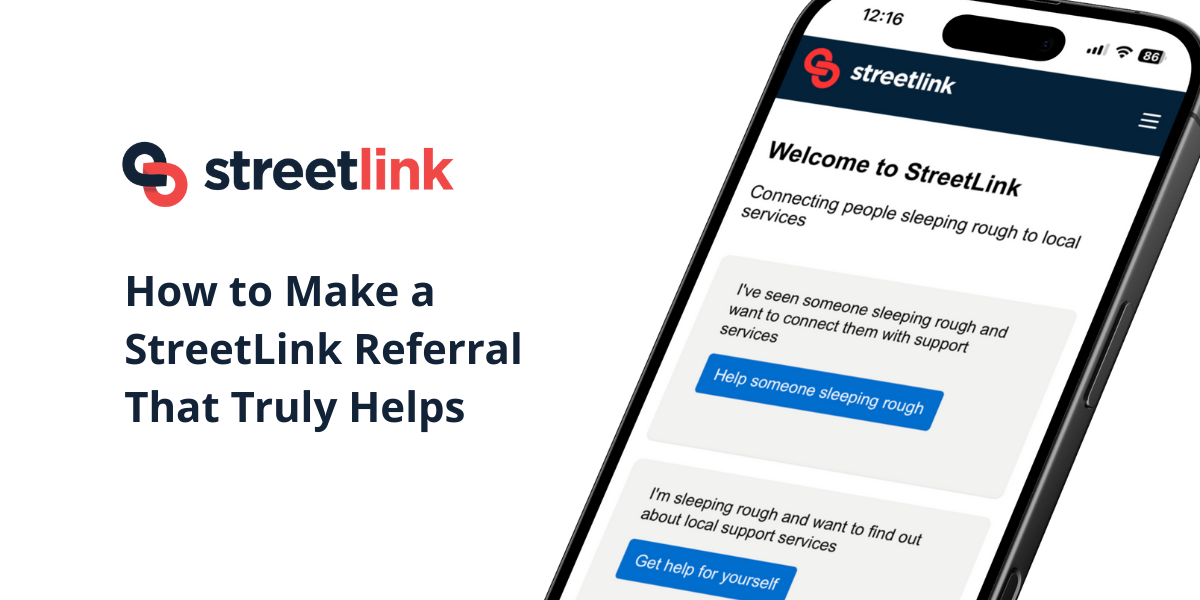
One practical action anyone in the West Midlands can take is to make a referral through StreetLink. StreetLink gives local outreach teams the information they need to try to find someone who may be sleeping rough, check they are safe and offer support. A clear referral does not just send a team to the right place. It can be the first step in someone being seen, listened to and supported onto a safer path.
A story from Coventry
Outreach workers in Coventry recently told us about a StreetLink alert last winter that shows how much a clear referral can matter.
On 2 January an alert came in that gave accurate details about someone sleeping in their car. Because the description and location were clear, the outreach team were able to find him early the next morning.
The man, whom we are calling Henry, is an ex serviceman. Just before Christmas his relationship had broken down and he had lost contact with his children. He was living with depression, anxiety and PTSD and was recovering from four knee operations after impact trauma, with more surgery ahead. The only place he felt safe enough to keep his belongings was inside his vehicle.
On the first visit the team shared information about local support and invited him to attend an assessment service. When he did not attend, they went back to check on him again on 6 January.
Severe weather was forecast and SWEP had been activated. SWEP is the Severe Weather Emergency Protocol which is activated in very cold or dangerous weather so anyone sleeping rough can be offered a safe place indoors.
During this contact he completed a risk assessment and outreach workers made referrals to supported accommodation.
Henry was offered a SWEP space and then a hotel but he explained why he did not want either option at that moment. In his own words:
“I would rather stay in my car and be with my belongings rather than go somewhere for one night and feel unsettled. I would rather wait for something permanent.”
The team respected this and returned the next day to check on him again. Temperatures had dropped and there was ice inside and outside the vehicle. That day they were able to talk with him about a long term room that had become available. They checked whether the stairs in the property would be manageable for him because of his mobility issues. Henry said yes and on 8 January he signed for a long term room in supported accommodation.
The outreach worker made it clear that without the StreetLink alert they would not have found him.
This story is a reminder that not everyone sleeps in visible places. Safe spots are often tucked away. Outreach teams cannot visit every location in a large city which is why accurate alerts matter so much. Your care in making a clear referral can open the door to support that might otherwise never reach someone.
Why StreetLink matters in the West Midlands
In this region partners work together to prevent homelessness wherever possible. The West Midlands approach is called prevention by design. It sits within the regional Positive Pathway, which includes universal prevention, targeted prevention, crisis support, recovery, move on and a settled home. Every good StreetLink alert plays a quiet role in this wider system. It helps people to be found earlier and prevents them slipping through gaps.
StreetLink and Street Support West Midlands work alongside councils, faith and community groups and outreach teams as part of the region’s commitment to design out homelessness. Your care is part of this collective effort.

The Positive Pathway is the West Midlands way of thinking about support for people at risk of homelessness. It breaks the journey into clear stages so partners across the region can work in the same direction.
In simple terms it means:
- Universal prevention
Helping people stay steady before problems grow. This includes good information, advice and early support. - Targeted prevention
Stepping in when someone is starting to struggle. This might be money worries, family breakdown or health issues that could lead to homelessness. - Crisis response
Making sure people who are already homeless or sleeping rough are safe, seen and supported. Outreach teams, emergency accommodation and triage all sit here. - Recovery and move on
Helping people rebuild stability. This includes support with health, skills, confidence and reconnecting with the community. - A settled home
The long term aim. A place where someone feels safe, rooted and able to move forward.
The Positive Pathway helps everyone understand that homelessness is not a single moment. It is something that can be prevented, responded to and recovered from when the right parts of the system work together.
The West Midlands Combined Authority has a simple belief at the heart of its homelessness work. Homelessness is not a personal failure. It is something created by gaps in systems like housing, health, employment and community support.
Designing out homelessness means working together to close those gaps so fewer people reach crisis in the first place.
In practice this includes:
- Bringing homelessness prevention into everyday services
Health, skills, transport, housing, employment and community partners all have a role in spotting risk early and offering the right support. - Making sure people can access advice and guidance before crisis
Clear routes into help so people are not passed around or left to reach breaking point. - Strong links with faith and community groups
Local knowledge and trusted relationships help people feel seen and supported. - Listening to people who have lived through homelessness
Their experience shapes what needs to change and how services work. - Specific focus on groups most at risk
For example veterans, young people and people affected by domestic abuse.
Designing out homelessness is not a quick fix. It is a shared commitment to building a region where fewer people fall through the cracks and where support feels humane, early and joined up.
What makes a good StreetLink referral
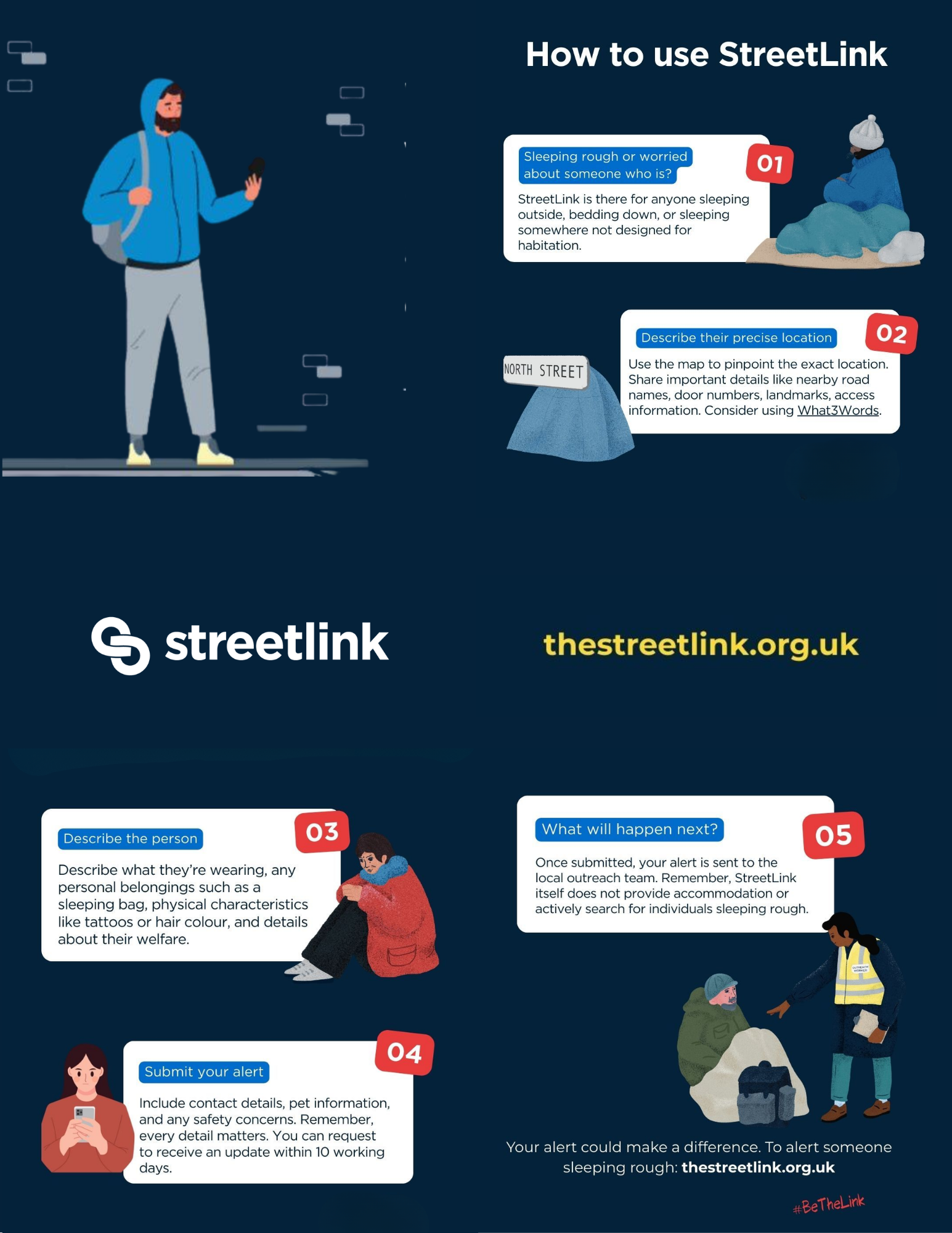
StreetLink uses a simple three step guide.
|| Locate || Describe || Submit ||
These steps give outreach teams the best chance of finding someone quickly and safely.

1. Locate the exact place
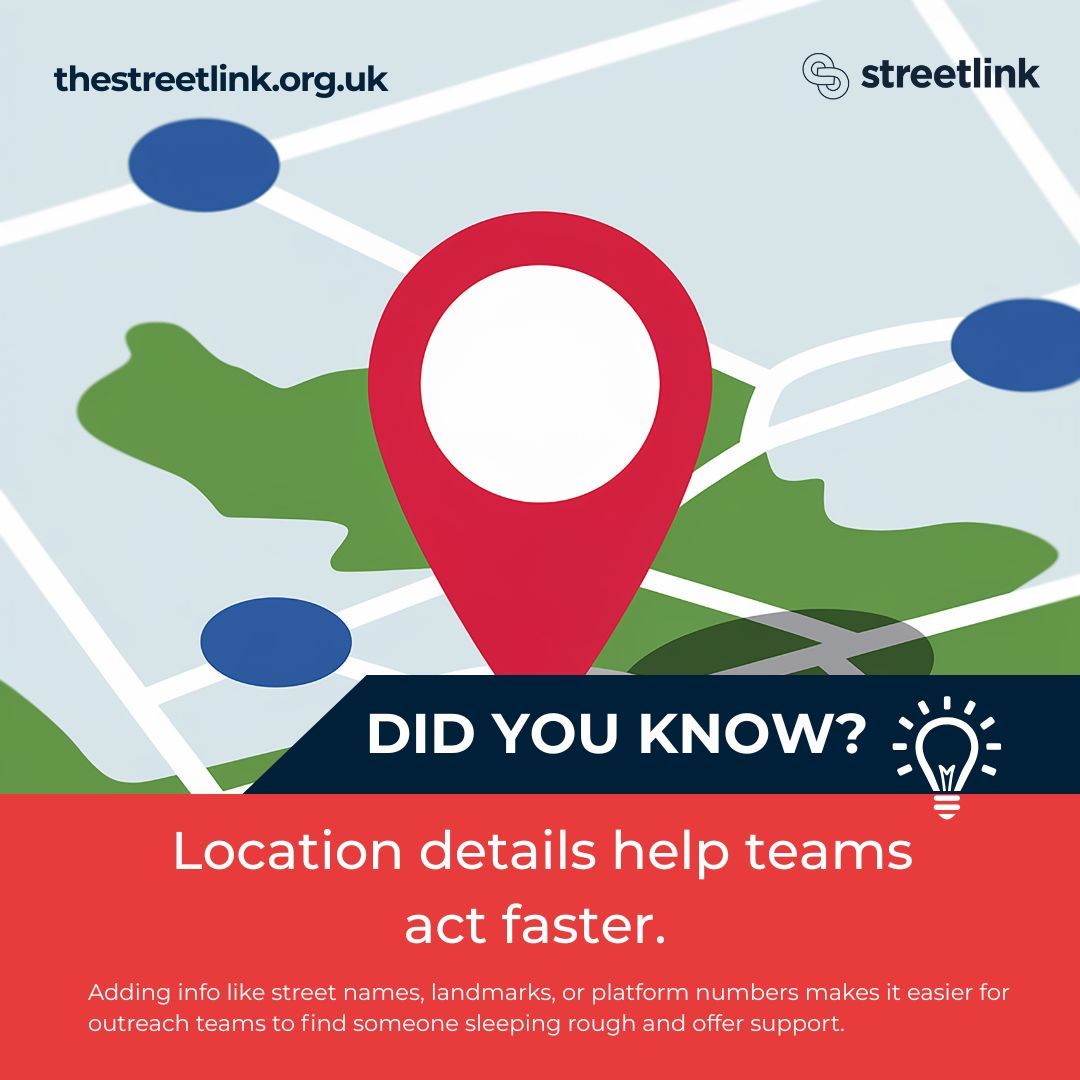
Share the exact location where you saw the person bedding down. Road names, shop fronts, nearby landmarks or the precise corner of a building all help. In parks or large spaces describe the specific entrance and where inside the area the person was resting. If you know What3Words,(website or app) including it can make the location even more accurate.
If the map pin is difficult to place, choose the closest point possible and add written directions afterwards.
2. Describe the person respectfully
A short description helps the outreach team identify the right person in a busy area. Clothing, footwear, sleeping bag colour, height or hairstyle can all help. Mention any belongings nearby such as bags or blankets. If the person shared anything about their situation, include it in your own words.
If you have concerns about their health or safety, note it clearly. If your concern is urgent contact emergency services.
3. Submit the alert
Once you submit your alert it is sent automatically to the outreach team or local authority. If there is enough information they will try to locate the person, check they are safe and offer support.
Clear and specific alerts help outreach workers act quickly and effectively.
When to make a StreetLink alert
StreetLink alerts are for times when someone appears to be sleeping rough or bedding down for the night. This usually means they have a sleeping bag, blanket, tent or belongings with them and they look like they are settling somewhere to sleep.
People who are sitting, walking around, sheltering for a short time or asking for money are not always sleeping rough. Making an alert in those moments can send outreach teams to the wrong place and can slow down efforts to help people who are actually bedded down.
If you are unsure, think about whether the person looks like they are trying to sleep or rest overnight. If they are, making an alert can help outreach workers find them safely.
If you make an alert in good faith but the person is not sleeping rough, the outreach team will still treat the information with care.
What happens after you have made a referral
It is natural to hope for immediate action after submitting an alert. The reality is that outreach work can take time. Here is what usually happens.
Outreach teams will try to locate the person
If enough information has been provided the team will go out to look for the person. Sometimes they are found quickly. Sometimes it takes several visits. Sometimes the person has moved. Outreach workers spend long hours on the streets and may not update their systems straight away which means you might not receive an update immediately even when work is underway.
If they are found, support begins
If the team finds the person they will check how they are, offer support and talk about options. Moving away from rough sleeping often takes weeks or months. Trust builds slowly and circumstances change. Your alert is often the first step in that journey.
What StreetLink does and does not do
StreetLink passes information to local teams. It does not provide accommodation or go out searching itself. It plays a connecting role, making sure the right teams receive the right information.This is important when thinking about updates. If you asked for email updates they may take up to two weeks and will be brief because teams cannot share personal information.
Why the person may not be found by the outreach team.
There can be times when someone has moved before the outreach team arrives. People move for many reasons including safety, weather changes or being asked to relocate by security teams or businesses. This is no one’s fault and it is a normal part of life on the streets.
It is important not to feel discouraged. A good description can help outreach workers recognise the same person in a different spot and continue the conversation. Your alert is still valuable.
Making a StreetLink alert about yourself
If you are sleeping rough and want help, the quickest way to receive support is to contact your local council’s housing options team. Outreach services vary across the West Midlands and StreetLink alerts rely on accurate location details. Councils can explain the support available and help you understand your options.
If you feel able, you can also make a StreetLink alert about yourself. Give as much detail as you can about where you are, what you look like and how long you have been there. If you move, create a new alert. You may receive email updates if you provided an address although these can take up to two weeks and will be limited.
If you are feeling overwhelmed or distressed, call 999 if you need urgent help or contact Samaritans on 116 123 for free and confidential support at any time.
How to act
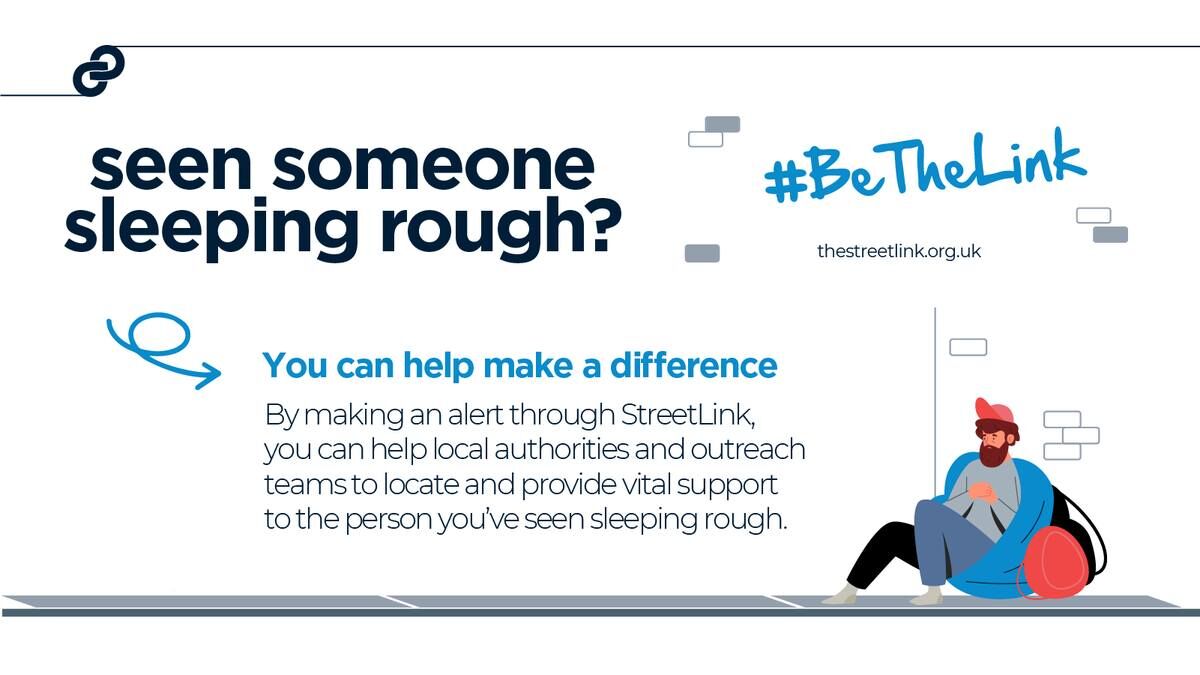
If you see someone bedding down you can make a referral through the StreetLink website at www.thestreetlink.org.uk.
You can also find ways to find help in other ways through Street Support West Midlands. It is a great resource for signposting to local organisations who can support someone experiencing homelessness.
Always remember you can Give Help. Street Support West Midlands lists lots of ways you can give your time or energy where it is needed most. Donations and volunteering are part of preventing homelessness as well as responding to it.
If you would like to learn more, you can contact our regional team at westmidlands@streetsupport.net